- Blogs
What Is Trexo Robotics?
-
-
August 25, 2026
-
Reading time 13 mins
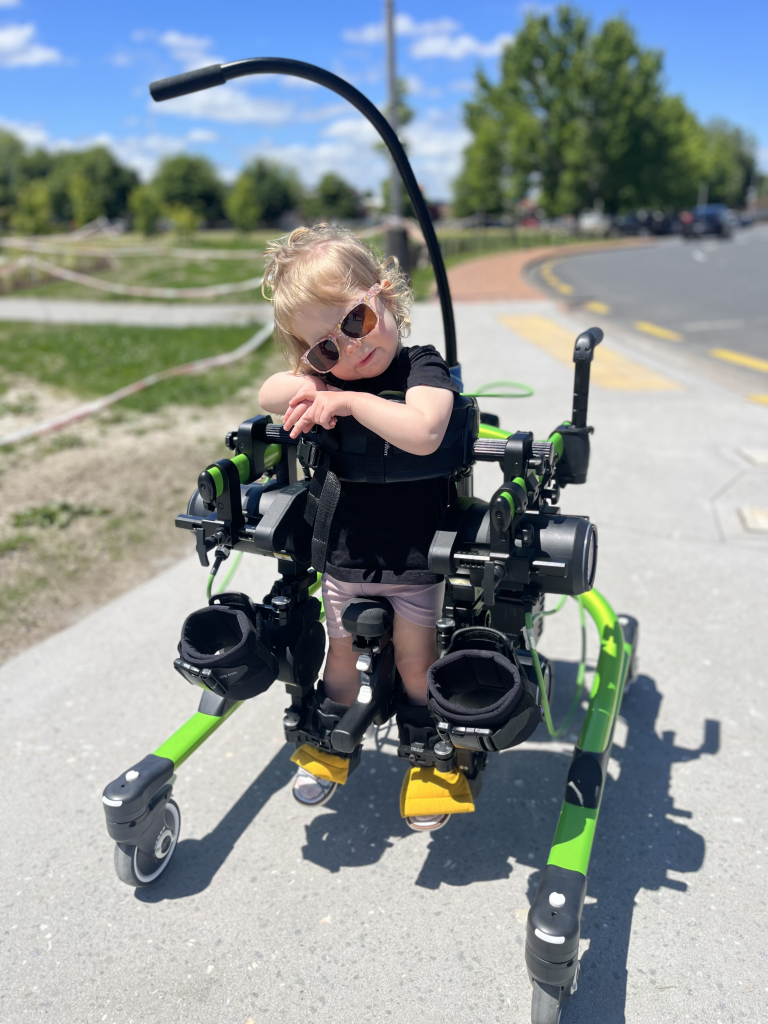
Table of Contents
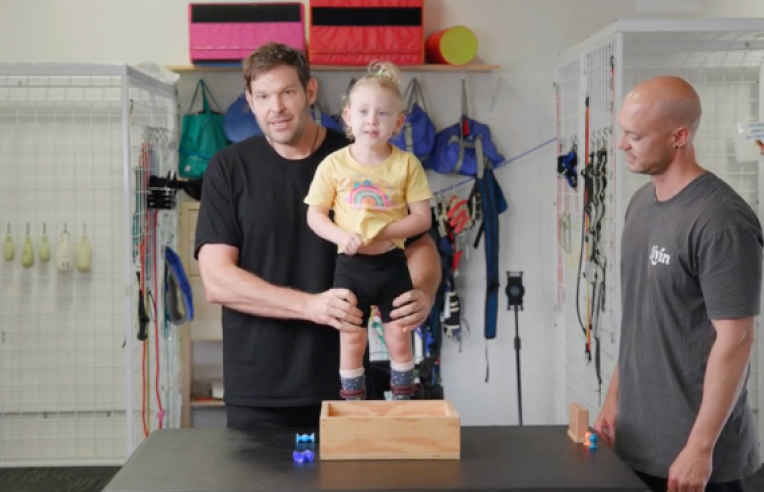
For children with mobility impairments, achieving independent over-ground walking is often a primary goal of rehabilitation, yet one that can be difficult to progress using manual therapy alone. Centre of Movement is the first clinic in New Zealand to introduce the Trexo Robotic gait trainer. We’re proud to bring this life-changing technology to Kiwi families. At the Centre of Movement, the Trexo is integrated into our intensive, family-centred Trexo Robotics therapy programmes.
What Is Trexo Robotics?
Trexo is an actively powered wearable robotic walking device that attaches to a Rifton walker, guiding a child’s legs through a natural, customised heel-to-toe walking pattern. The device allows adjustments to be made in each phase of the gait cycle from the angles of the major joints and the length/width of your child’s lower limbs.
Every setting is tailored to the individual child: speed, weight-bearing, and level of physical support can all be adjusted and progressed over time as a child grows stronger. The device is even mobile enough to be used across different activities and environments, meaning therapy doesn’t have to be confined to four walls.
The technology was born from a deeply personal mission. Trexo’s founder, engineer Manmeet Maggu, set out to build a solution after his nephew was diagnosed with cerebral palsy and told he might never walk. That drive to prove otherwise has since grown into a device used by children around the world, with the Australia and New Zealand rollout delivered in partnership with APEX Mobility.
Why Robotic Gait Training Matters for Neurodevelopment?
Walking isn’t just a physical milestone,it’s deeply connected to how the brain develops. Repetitive, task-specific movement is one of the most powerful tools we have for encouraging neuroplasticity, the brain’s ability to form and strengthen new neural pathways.
Recent clinical research backs this up. In a systematic review where robot assisted gait training was compared with conventional therapy or treadmill training, it was found that gait speed, walking distance, and gross motor skills including running and jumping significantly improved (Cortez-Perez et al., 2022). Robot assisted goat training has also found that just two weeks of robot-assisted gait training can lead to improved walking abilities alongside measurable increases in functional connectivity within the brain’s sensorimotor network (Julien et al., 2024).
This matters because robotic gait training provides exactly the conditions motor learning thrives on: intensity, repetition, task specificity, and active participation, all of which support neuroplastic change (Choi et al., 2024). Because the Trexo allows for a high volume of consistent, correctly-patterned steps in a single session (far more than a child could achieve with manual assistance alone), the brain gets repeated opportunities to reinforce the walking pattern as a learned, automatic movement. These benefits aren’t just seen directly after using robotic assisted gait training, research has shown that improvements in gait are maintained in the long term (Volpini et al., 2020).
Beyond Walking: Benefits for Overall Health and Wellbeing
The advantages of getting a child upright and moving extend well beyond gait itself:
Physical health and activity levels – Children with mobility challenges often spend long periods seated, which affects cardiovascular fitness, bone density, and muscle strength. A pilot study of wearable exoskeleton gait training in children with spastic cerebral palsy found improvements in physical activity and mobility, suggesting robotic gait training can help address the sedentary patterns that so often come with limited mobility.
Muscle engagement and strength – Rather than passively moving a child’s legs, Trexo is designed on an “assist-as-needed” principle providing support only when necessary while encouraging the child to actively control their own weight-shifting and balance. This active participation helps build genuine strength and motor control, not just passive movement.
Bone and joint health – Regular weight-bearing through the legs supports healthy bone development and joint alignment, something that’s especially important for children who spend much of their day in wheelchairs or seated positions.
Digestive, respiratory and circulatory benefits – Being upright and active supports healthy digestion, deeper breathing, and better circulation, all of which are quietly important contributors to a child’s overall wellbeing.
It’s worth noting that the evidence base for robotic gait training is still developing. Some studies show clear gains in gait speed, endurance, and activity levels, while broader measures of gross motor function haven’t always shown significant change in the short term. What the research consistently points to, however, is that robotic gait training is a safe, engaging, and promising addition to a well-rounded therapy programme and is most effective when combined with skilled, individualised therapy rather than used in isolation.
References:
● Cortés-Pérez, I., González-González, N., Peinado-Rubia, A. B., Nieto-Escamez, F.
A., Obrero-Gaitán, E., & García-López, H. (2022). Efficacy of Robot-Assisted Gait
Therapy Compared to Conventional Therapy or Treadmill Training in Children with
Cerebral Palsy: A Systematic Review with Meta-Analysis. Sensors (Basel,
Switzerland), 22(24), 9910. https://doi.org/10.3390/s22249910
● Julien, L., Moreau-Pernet, G., Rochette, E., Lemaire, J. J., Pontier, B., Bourrand, S.,
Pereira, B., Chassain, C., Sontheimer, A., & Sarret, C. (2024). Robot-assisted gait
training improves walking and cerebral connectivity in children with unilateral cerebral
palsy. Pediatric research, 96(5), 1306–1315.
https://doi.org/10.1038/s41390-024-03240-1
● Choi, J. Y., Kim, S. K., Hong, J., Park, H., Yang, S. S., Park, D., & Song, M. K.
(2024). Overground Gait Training With a Wearable Robot in Children With Cerebral
Palsy: A Randomized Clinical Trial. JAMA network open, 7(7), e2422625.
https://doi.org/10.1001/jamanetworkopen.2024.22625
● Volpini, M., Aquino, M., Holanda, A. C., Emygdio, E., & Polese, J. (2022). Clinical
effects of assisted robotic gait training in walking distance, speed, and functionality
are maintained over the long term in individuals with cerebral palsy: a systematic
review and meta-analysis. Disability and rehabilitation, 44(19), 5418–5428.
https://doi.org/10.1080/09638288.2021.1942242
Blog
You maybe also Like.
- Blogs
What Is NMES/FES in Paediatric Therapy and How Does It Work?
Functional Electrical Stimulation (FES) and Neuromuscular Electrical Stimulation (NMES) are...
- Blogs
Why Early Intervention is Important for Tamariki in New Zealand
When a child is identified as having a developmental delay,...
- Blogs
Paediatric Occupational Therapy in New Zealand: What Do OTs Actually Do, and How Can They Help?
Paediatric Occupational Therapists (OTs) in Aotearoa New Zealand support children...