- Blogs
A Physiotherapists Approach to Dynamic Movement Intervention (DMI)
-
-
February 11, 2026
-
Reading time 11 mins
Table of Contents
Dynamic Movement Intervention (DMI) is a technique used by clinicians such as
physiotherapists, exercise physiologists and occupational therapists to help children
with motor delays develop automatic postural responses and progress towards their
developmental milestones.
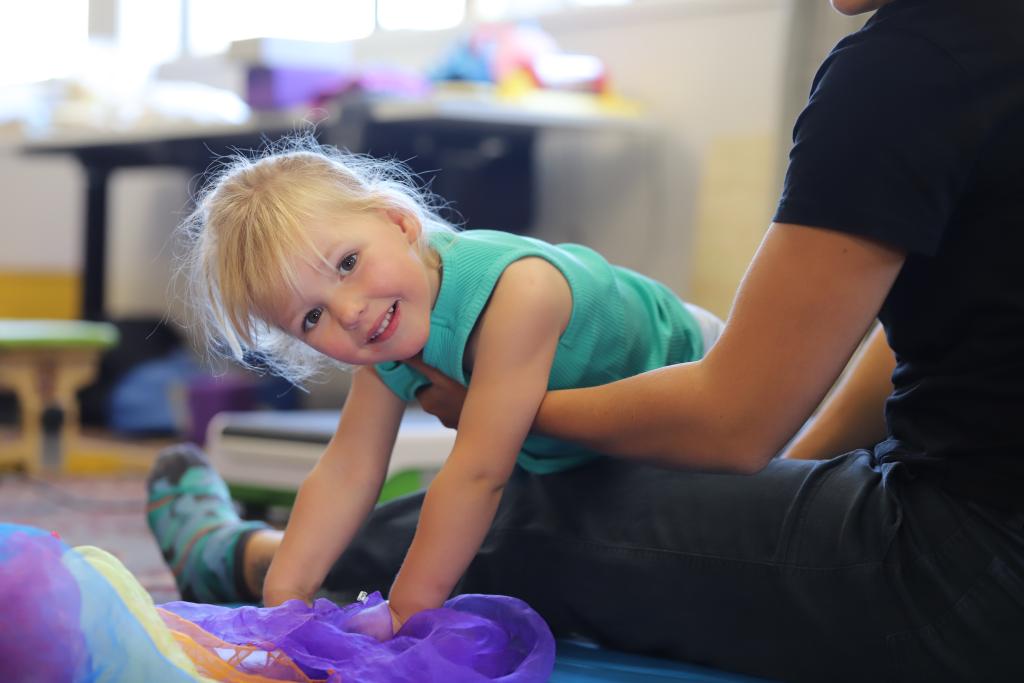
Through DMI, children with conditions such as developmental delays, cerebral palsy,
genetic disorders, altered muscle tone, or other neurological or musculoskeletal
conditions participate in active, functional and multi-directional movements. This
approach supports the development of essential skills, including head control, sitting
balance, crawling, walking, navigating obstacles, and climbing stairs, whilst
enhancing strength, balance, motor control and coordination required for these
activities.
DMI was co-founded in 2021 by physical therapists Jake Kreindler and Jo-Anne
Weltman. They developed DMI as an evolution of Cuevas Medek Exercises (CME),
building on that older approach but incorporating modern research, alignment
principles and ensuring more accessibility for therapists and their clients.
Why is active physical therapy so important?
Paediatric physiotherapy has advanced significantly over the past 5–10 years, with
increasing recognition of the importance of strength training and promoting
independent, active movement alongside traditional passive therapy. DMI has been
at the forefront of this approach. DMI targets neuroplasticity, which is the brain’s
ability to form new pathways, reorganise itself, and learn from experiences.
Stimulating neuroplasticity requires giving the brain meaningful experiences to learn
from. Through DMI, a child can practice movements with the hands-on support and
guidance of a therapist, creating opportunities for neuroplasticity that would
otherwise be unavailable. In contrast, if a child only experiences passive
movements; where the therapist moves the body without the child actively
responding to environmental and positional demands, the brain is less able to
develop these pathways or acquire the skills needed for eventual independence.
Stretching, modifications to muscle tone, integration of primitive reflexes, contracture
management and joint alignment, are all commonly viewed as areas which will
require predominately passive techniques including stretching, massage, and
passive joint movements. However, that is not the case. Although these techniques
are necessary in their own way and have a large place in physical and occupational
therapy for children, DMI can assist alongside these techniques to target the areas in
an active way which stimulates neuroplasticity faster.
“Neuroplasticity is stimulated by novel, challenging tasks. Without novel and
challenge, well-established habits always dominate” (Hannaford, C., 2005). Through
DMI therapy and guidance from a therapist at Centre of Movement, we provide the
optimal challenge point for children to activate stimulation in the brain to encourage
neuroplasticity.
Why come to Centre of Movement to see a Physiotherapist?
DMI is a technique which is primarily used for children with motor delays that effect
their development. At Centre of Movement we see children with a range conditions
as well as children without a diagnosis who have delayed development. Some of the
main diagnosed conditions that we see at Centre of Movement where DMI is an
important treatment approach include:
- Cerebral Palsy
- Downs Syndrome
- Spina Bifida
- Muscular Dystrophy
- Prader-Willi Syndrome
- Angelman Syndrome
- Rett Syndrome
While a common technique used with children with neurological conditions, DMI is
also highly effective for children experiencing delays due to musculoskeletal issues.
For example children with torticollis, toe walkers, scoliosis, or other postural
concerns can benefit from DMI as a component of their treatment.
A physiotherapist’s role in DMI therapy is to:
- Assess each child’s strength, joint range, balance and movement patterns
through a physical assessment, as well as complete a DMI assessment to
observe functional skills and determine which areas and milestones need to
be targeted. - Set individualised goals for mobility, endurance and functional independence.
- Complete DMI therapy programs with children to promote motor learning and progressing exercises to meet their development progress.
- Collaborate with families, carers and the therapy team to support consistency
and engagement in movement skill development into their daily life through
home exercise programs and collaboration.
DMI Therapy Precautions and Contraindications
Although DMI therapy is beneficial, it may not be for everyone. There are some
medical conditions in which are a contraindication for DMI, and some in which some further precautions should be taken when performing DMI. A consult with a trained therapist will make the appropriate assessment and determination of the
appropriateness of DMI therapy.
References
Hannaford, C. (2005). Smart moves: Why learning is not all in your head (Rev. ed.).
Salt Lake City, UT: Great River Books
Source: Centre of Movement Australia – View original article
Blog
You maybe also Like.

- Blogs
Occupational Therapy and Functional Hand Use
Navigating the intricate terrain of human emotions, emotional regulation Navigating...
- Blogs
A Physiotherapists Approach to Dynamic Movement Intervention (DMI)
Navigating the intricate terrain of human emotions, emotional regulation Navigating...
- Blogs
Occupational Therapy and Emotional Regulation
Navigating the intricate terrain of human emotions, emotional regulation Navigating...