- Blogs
Centre of Movement featured in NZ Herald: How robotic walking therapy is helping children take their first steps
-
By Amy Davidson Occupational Therapist
-
March 9, 2026
-
Reading time 13 mins
Table of Contents
Centre of Movement was recently featured in the NZ Herald and Rotorua Daily Post, highlighting the story of one young boy whose progress with robotic walking therapy is giving his family renewed hope.
Ari Higgison, from Whangārei was diagnosed with a rare neurodevelopmental condition. Through intensive therapy at the Centre of Movement and the use of a Trexo robotic walker, Ari has taken great big steps toward walking independently.
His story illustrates the powerful impact that early intervention, intensive therapy and assistive technology can have for children living with neurological conditions.
A journey that began with uncertainty
Ari’s parents, Lucy and Dane Higgison, first noticed developmental concerns when Ari was a newborn. Feeding was difficult and he appeared uncoordinated when using a bottle. By the time he was six months old, Ari had not yet reached some expected developmental milestones, including sitting independently.
At the age of two, he was diagnosed with GNA-01, an extremely rare neurodevelopmental disorder that affects how the brain communicates with the muscles. Although Ari’s cognitive abilities were unaffected, the condition made movement and coordination extremely challenging.
Lucy explained that even simple movements could take time for Ari’s brain to translate into physical action.
Finding support through Centre of Movement
The Higgison family later discovered Centre of Movement, our paediatric allied health clinic specialising in intensive therapy for children with neurological and developmental challenges.
We had previously hosted intensive therapy pop-up clinics in Rotorua before opening a permanent New Zealand clinic in July 2025. Earlier in 2025, Lucy travelled with Ari to our Gold Coast clinic for a three-week intensive therapy program where Ari was introduced to the Trexo robotic walker.
Learning to walk with robotic support
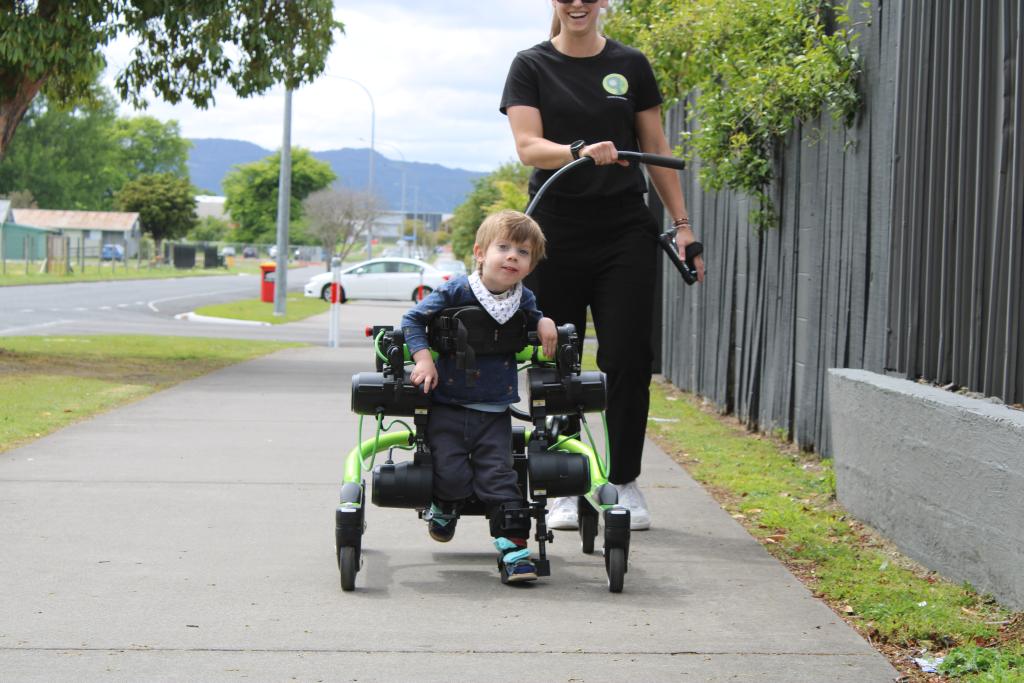
Before starting therapy, Ari was able to take only a few steps between his parents. However, the movement lacked control and stability. The Trexo robotic walker helped slow the process down and guide each step, allowing Ari to practise coordinated movement patterns safely and consistently.
As our clinic lead Nicole Adamson explained in the NZ Herald article, the Trexo walker guides each leg through precise, repeatable movement patterns that help retrain the brain and muscles to work together.
The technology adapts to the child’s pace and encourages proper alignment, step length and weight shifting, key elements in building strength, endurance and confidence.
Remarkable progress
Following the intensive therapy program, Ari’s progress was obvious. He was soon able to walk about 15 controlled steps and stop himself independently. Through continued therapy sessions in Rotorua, Ari has continued building strength and coordination and can now practise walking without needing his parents to catch him.
Lucy described the change as making a “massive difference” for her son. During a later therapy program, Ari began working on transitioning between sitting and standing, another important milestone in developing independence.
Why intensive therapy can make such a difference
Children with neurological conditions often benefit from therapy approaches that combine high repetition, structured movement training and specialised assistive technology. Devices such as the Trexo robotic walker help children practise the correct walking patterns repeatedly while providing the support needed for balance and alignment.
This repetition helps strengthen neural pathways between the brain and body, which is
essential for motor learning and coordination. When therapy is delivered in an intensive format, children can practise these movements many times within a short period, helping accelerate progress.
Making therapy more accessible
The opening of Centre of Movement’s Rotorua clinic has made therapy more accessible for families in New Zealand who previously needed to travel internationally for specialised programs.
For the Higgison family, this has made ongoing therapy more accessible. Their goal is to continue participating in intensive programs regularly so Ari can keep building on his progress.
Government response highlights the importance of early intervention
The Health New Zealand Te Whatu Ora made comments to the NZ Herald regarding the importance of early intervention and therapy for children with developmental conditions.
Dr Jacqui Lunday, National Chief for Allied Health, Scientific and Technical Services at Health New Zealand, emphasised that physical therapy plays an important role in supporting children with disabilities to reach their potential. She explained that multidisciplinary child development services are delivered through community-based teams, often involving physiotherapists, occupational therapists and other specialists who support families with motor development, life skills and sensory processing.
According to the Ministry of Education, physiotherapy for children aged five and under is typically delivered through Health New Zealand’s child development teams, either in hospital settings or within the home. Some children also receive support through early intervention specialist providers contracted by the Ministry.
The Ministry of Social Development also noted the importance of early support for children with developmental delays or disabilities. Disability Support Services continue to fund programs designed to help children build skills, reach developmental milestones and strengthen long-term independence.
While public and community-based services provide valuable support for many families, specialised therapy providers and intensive programs can also play an important role in complementing these services and expanding the options available to children and their families.
A story of hope
Being featured in the NZ Herald highlights something Centre of Movement sees regularly, when children are given the right support, technology and therapy environment, their potential can grow in ways families may not have thought possible.
Every child’s journey is different, but Ari’s progress is a powerful reminder that early intervention and specialised therapy can open doors to greater independence.
Visit NZ Herald for the full story → Article
Blog
You maybe also Like.
- Blogs
What Is NMES/FES in Paediatric Therapy and How Does It Work?
Functional Electrical Stimulation (FES) and Neuromuscular Electrical Stimulation (NMES) are...
- Blogs
Why Early Intervention is Important for Tamariki in New Zealand
When a child is identified as having a developmental delay,...
- Blogs
Paediatric Occupational Therapy in New Zealand: What Do OTs Actually Do, and How Can They Help?
Paediatric Occupational Therapists (OTs) in Aotearoa New Zealand support children...